A Floor of Curiosity
Restless Forge was made from decades of two things: frustration and curiosity.
The frustration comes from a digital sea of subscriptions, freemiums that frustrate you into paying, and unsubscribe buttons hidden in corners. If today's online landscape were physical it would be like paying a monthly fee to brush your teeth. (Which isn't too far off the mark, because I actually do have a subscription to refill my toothbrush head.)
But here's the part that gets under my skin. Most of these subscriptions are charging you rent to process files you already own, on hardware you already paid for. Smallpdf charges $15 a month to merge two PDFs. Resume.io charges $24.95 every four weeks to download a resume you already typed. Canva Pro costs $15 a month for image resizing. (Numbers from August 2026) The actual computation in all three cases happens on your device. The server in the middle exists to collect a toll, not to do work.
That's what Restless Forge is pushing against. Every tool on this site runs in your browser. Your files never leave your machine. There's no account to create, no trial to expire, no credit card form between you and the thing you came here to do. If a tool needs server-side processing for something your browser genuinely can't handle (like AI-generated audio), it's clearly labeled and the privacy implications are spelled out on that tool's page. Otherwise, there is no server to send your data to because I never built one.
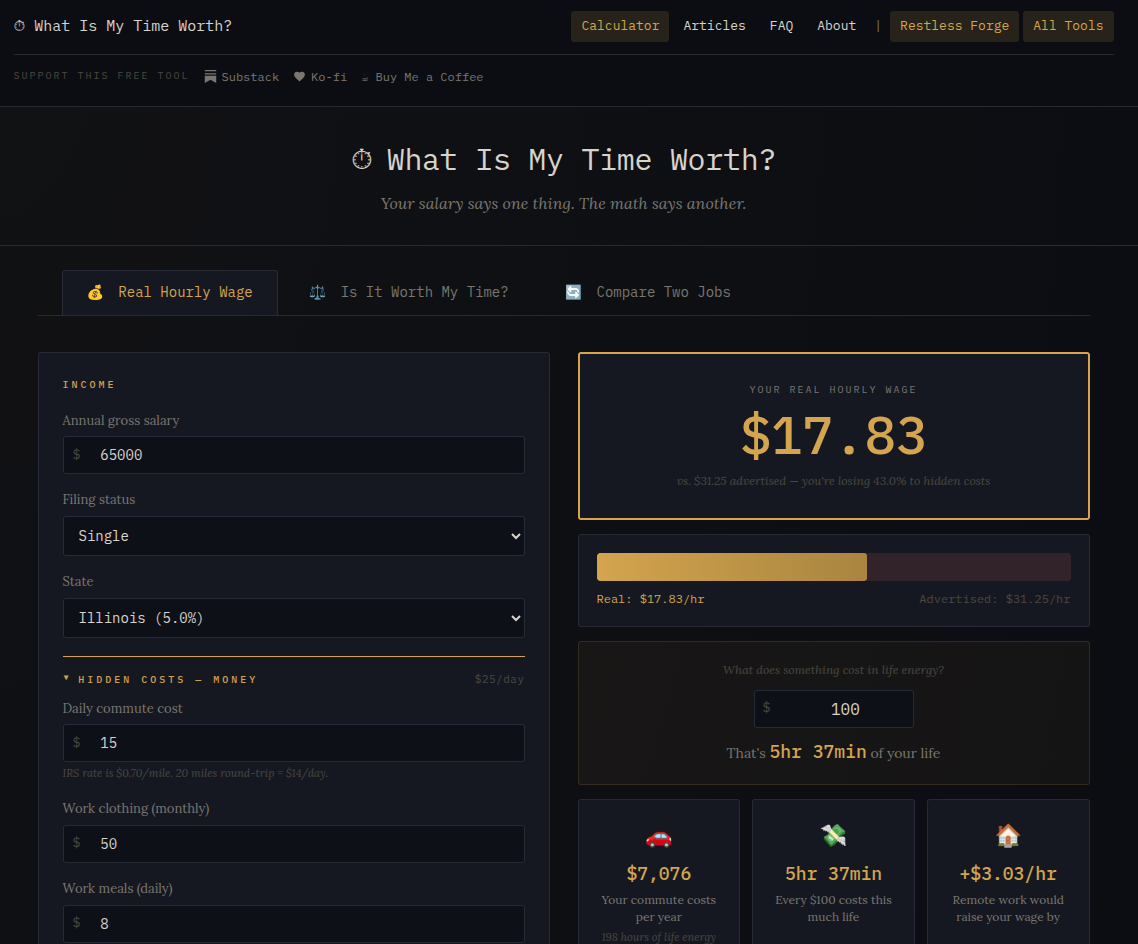
What's here right now: What Is My Time Worth helps you decide whether to fix your own sink or hire a plumber. TattooSafe lets you preview a tattoo design on your body using your phone camera. HoloPath turns any image into a holographic GIF. Rise & Rhyme (coming soon) will read your calendar and wake you up with an AI-generated song about your day. And there are more in the works. These are all free, and they'll stay free.
But past the frustration is curiosity, and that's the part of this story I actually enjoy telling.
A house full of CRTs
My dad ran an educational software company in the '80s called Cross Educational Software. They sold dissection simulations and lab diagrams to schools, back when that meant shipping physical media. I grew up in a house full of massive CRT monitors and Macintosh computers, which also happened to be in a small town in Louisiana. He would pay me 10 cents to do one of two things: burn floppy disks or kill household pests. He also told me there were games inside those Macintosh machines if I could figure out the shell commands to start them.
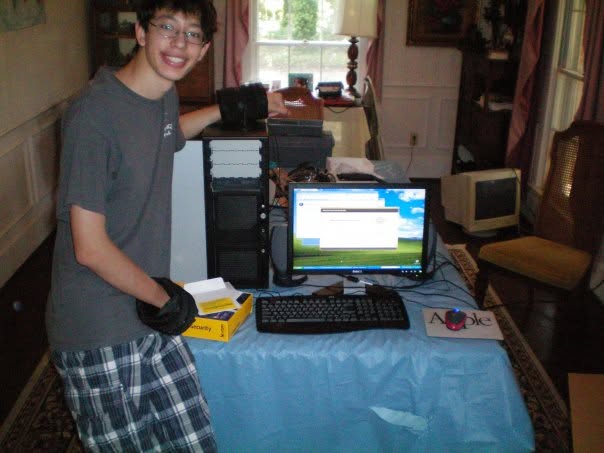
Between catching bugs outside and burning floppy disks inside, I had a front row seat to the early days of the Internet. I grew up writing stories in Storybook Weaver and grinding skills in Ultima Online. And to this day that landscape is my optimistic dream: a Wild West where kids could interact at the same level as PhDs and, for the first time, information was very nearly free.
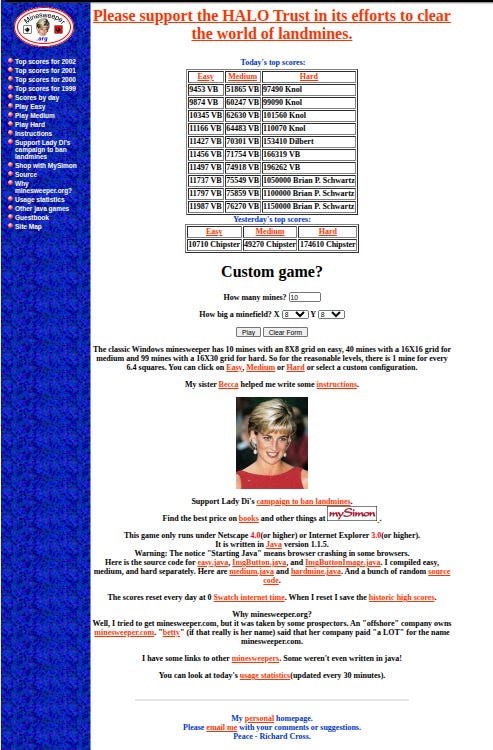
More on the early days of minesweeper.org here.
A new Wild West
I believe we're in the middle of a second Wild West. The '90s internet democratized access to information. You didn't need a library card or a university ID to read about anything. AI is doing the same thing for creation. A single person with an AI coding partner can now build tools that would have taken a team of five engineers a year ago. The barrier between "I have an idea for a useful thing" and "here it is, go use it" has never been lower.
That's the structural reason Restless Forge can exist. I'm one person. I have a day job. But the gap between what I can imagine and what I can ship has collapsed, and I'm using that gap to build things that are genuinely useful and give them away.

Try SandPath to convert your own images to sand table patterns.
Building with my kids
I want to mention my kids, Olivia and Connor, because they're a big part of why I do this. I grew up in a house where curiosity was the default setting, and I'm trying to build the same thing for them. We make bath bombs. We flip rocks in the back yard. We take their toys apart to see how they work. Some of those experiments end up as Substack posts, and some of them end up as tools on this site.
A man whose floor is curiosity can lose the audience, lose the brand, lose the whole scoreboard, and still get up in the morning wanting to see what's under the next rock. That's the energy behind this project, and it's the energy I want my kids to grow up around.
How this is funded
You'll see ads on this site. Side banners and a slot below the content. I made a deliberate choice about this: ads are the cost of entry, and the moment they start blocking the doorway, the workshop has failed.
Here's the deal. I need some revenue to justify the time I spend building these tools. Subscriptions would defeat the entire point. Donation-only models don't reliably cover hosting costs. Ads are the middle ground that lets me keep everything free without pretending I don't have a mortgage. If you see something interesting, click it. If you don't, keep using the tools. That's the arrangement, and I think it's fair.
I chose not to use analytics tracking. I don't run Google Analytics or any equivalent. Server logs rotate out after 14 days. The ads are served by Google AdSense, and Google's own privacy controls are available to you through their Ads Settings page. Beyond that, I don't want to know who you are or what you're doing. I just want the tools to be useful.
What's ahead
I'm actively building more tools, and I write about the process on Substack. If you want to follow along, or if you have an idea for something that should exist and doesn't, I'd like to hear from you. The code is open source on GitHub. The inbox is open at ken@restless-forge.dev.
Keep some irons in the fire. Create, refine, repeat.